
 By
By 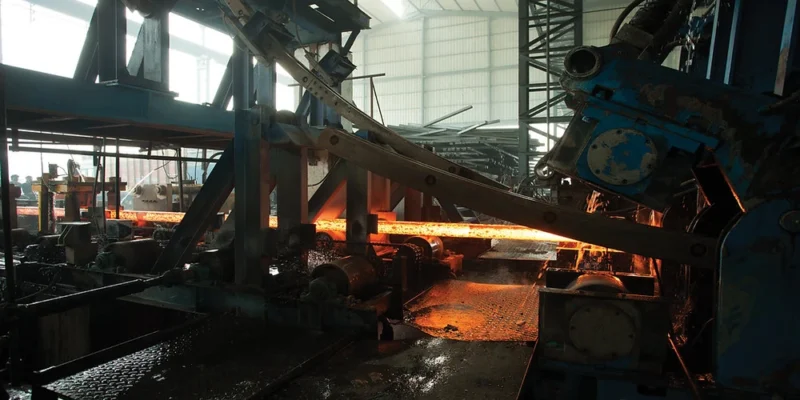
When people buy steel, they mostly focus on the end product only. They ask questions like: How strong is it? Will it perform consistently or not? Can it handle tough industrial applications?
These are important questions, no doubt about that. But the thing is, steel quality gets decided much earlier than most people actually realise. Long before steel reaches any fabrication shop or manufacturing facility, the production process itself is already affecting its quality from the beginning. And that is exactly the reason why integrated steel plants matter so much.
The design and operation of a steel factory can greatly influence the consistency, precision, reliability and quality of the product. That is why in today’s market, where customer expectations are growing, integrated plants continue playing an increasingly important role in the production process. This post will discuss how integrated steel plants improve steel quality.
What Is an Integrated Steel Plant?
Not all steel manufacturing facilities function the same way. Some companies are engaged in just one stage of production and work with other suppliers when it comes to the rest. Other companies manufacture their products through several stages in the course of one manufacturing process.
An integrated steel factory is designed to manage all major production processes under a single manufacturing ecosystem.
This typically includes the following stages:
- Ironmaking
- Steelmaking
- Casting
- Rolling
- Finishing
In simple words, raw materials enter from one end of the facility and finished steel products come out from the other end. One of the most common steel products is HRC (Hot Rolled Coils).
Because multiple production stages are connected and controlled under one system, manufacturers get much greater visibility over the entire process. And that turns out to be quite a big advantage when quality is the main goal.
Why Manufacturing Integration Matters in Steel Production
Let us imagine a situation here.
One steel company in India produces iron. Another company converts it into steel. A third company handles rolling. And a fourth steel company in India manages finishing operations.
Now imagine trying to maintain perfect consistency across all those different parts. It’s not easy at all.
Every handoff creates another opportunity for variation to enter. Different operating standards, different quality practices, different process controls. This is one reason why integrated steel plants are often preferred for producing high-quality steel.
Since major stages happen within the same manufacturing environment, there is better coordination between teams, better monitoring and faster decision-making whenever any adjustments become necessary. Simply put, fewer variables usually mean more consistent outcomes at the end.
Better Process Control Leads to Better Steel Quality
Steel quality does not come from a single machine or one inspection report alone. It comes from hundreds of small decisions made throughout the entire production process. These include:
- Temperature control
- Chemical composition
- Rolling parameters
- Cooling conditions
All these factors directly impact the quality of steel products. In the case of an integrated steel company in India, manufacturers can have higher visibility in regard to all these factors since everything happens inside the facility. In case deviations occur at some point, they can be eliminated instantly to prevent impact on the final product.
Consistency of the manufacturing process is the key component of high-quality steel production. It allows manufacturers to increase the quality of their products by reducing variability.
How Integrated Steel Plants Deliver Consistent Properties for HRC Steel
Nobody wants a batch of HRC steel that behaves differently every single time it enters production. Consistency matters a lot.
Whether it is dimensional accuracy, mechanical properties or chemical composition, manufacturers always expect steel to perform the same way every time without surprises. Integrated operations actually help make that possible.
Because production stages are closely connected with each other, manufacturers can maintain tighter control over quality parameters throughout the whole process. This leads to greater consistency of HRC steel across different batches and grades.
The Role of Advanced Manufacturing Technologies
Technology plays an important role in steel quality control, besides manufacturing process integration. Due to the fact that nowadays manufacturers have higher flexibility in terms of production, they are able to adapt the production processes to the specific requirements of certain industries. That may be especially beneficial in the case of integrated steel production.
For instance, AM/NS India’s Hazira plant works with three ironmaking routes at once: Midrex, Blast Furnace, and Corex.
The existence of multiple manufacturing technologies provides a wider range of grades, yet it preserves quality at the required level. Besides, such an approach increases flexibility in regard to industries’ needs.
The Bottom Line
Steel quality does not begin at the finishing line. It begins much earlier, inside the manufacturing process itself, from the very start. That is why integrated steel plants continue playing such an important role in modern steel production today.
By bringing together multiple stages of manufacturing under one system, an integrated steel factory can improve process control, enhance consistency, support precision and deliver higher quality steel products overall.






Comments